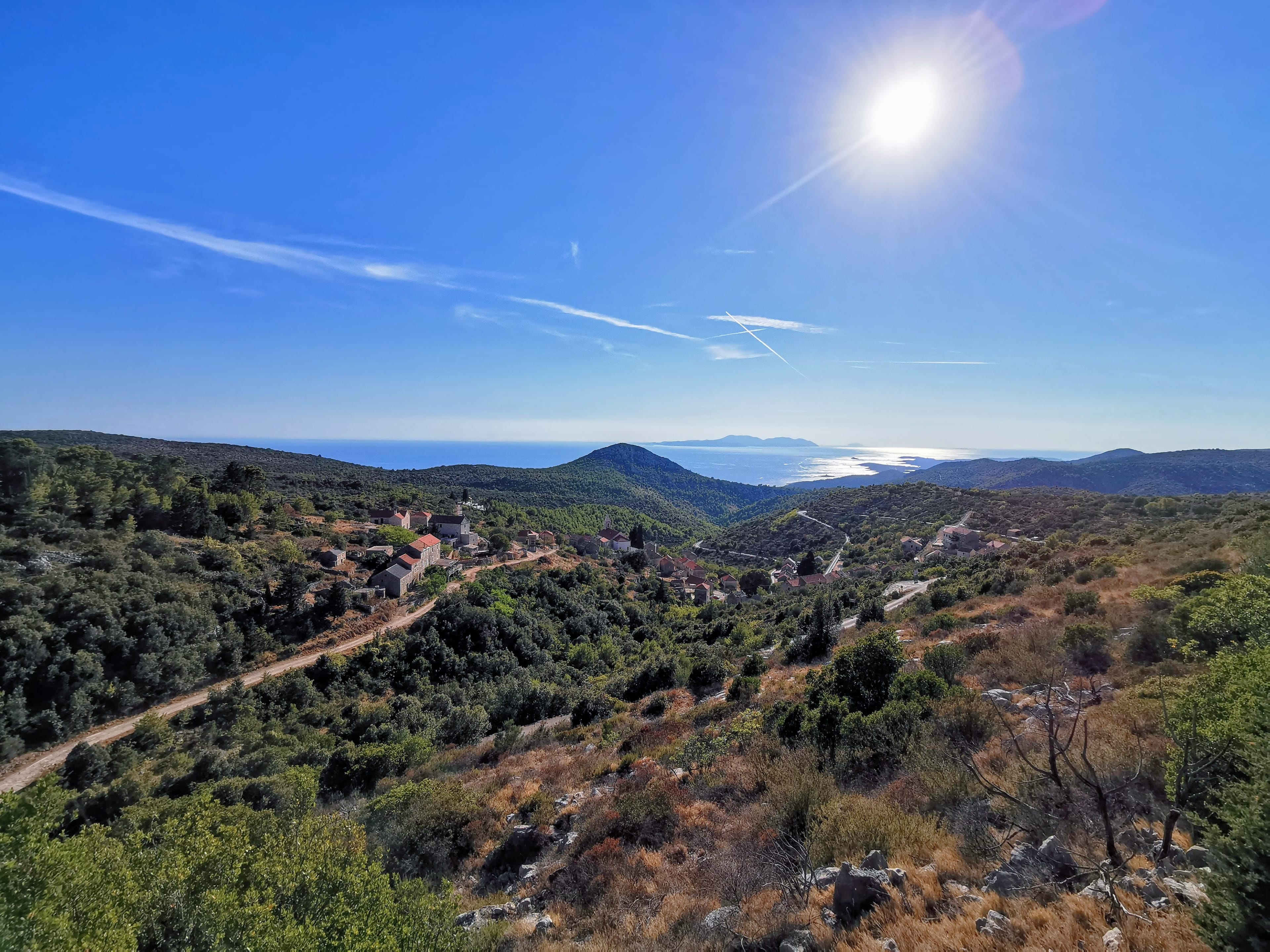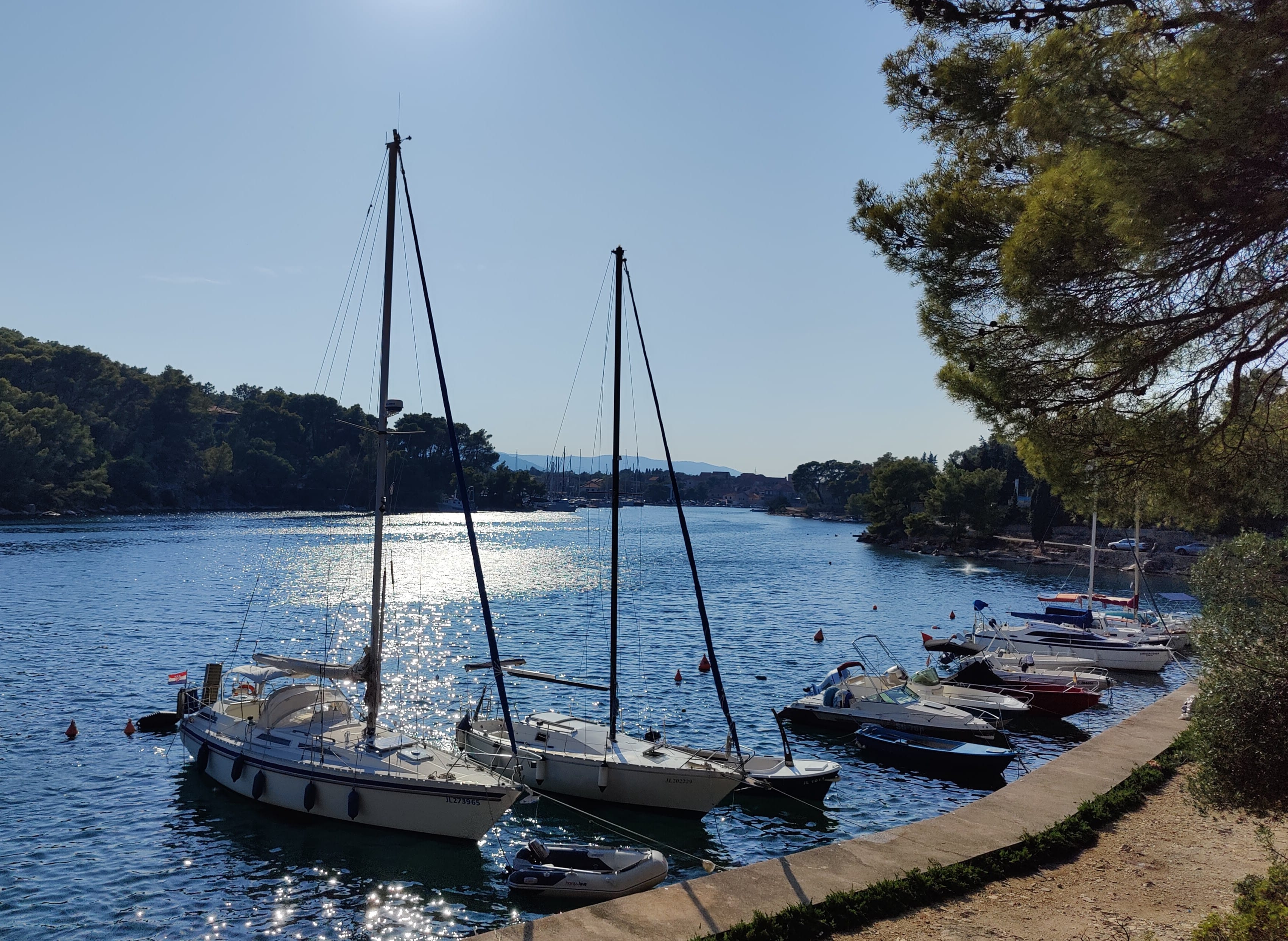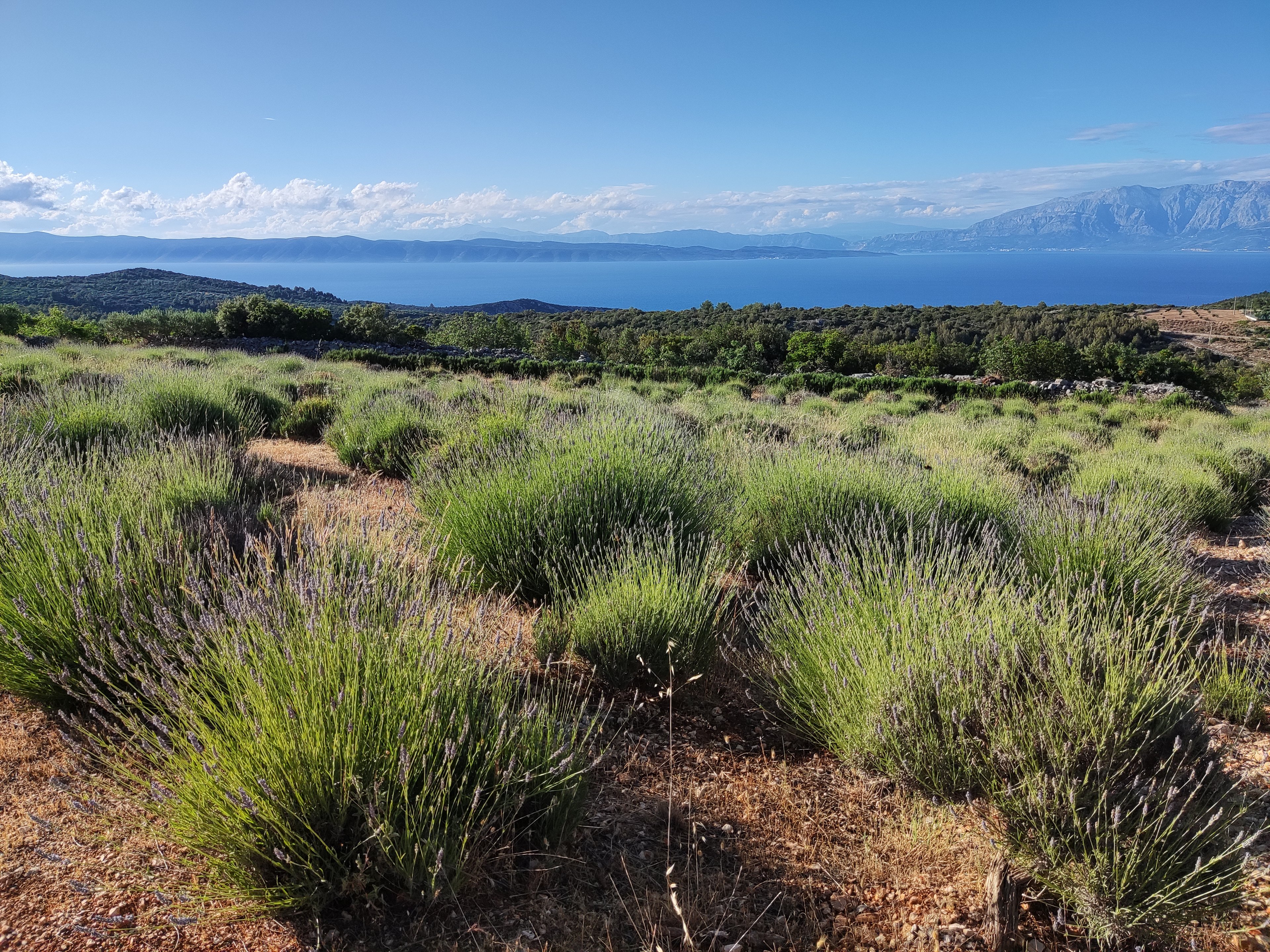
Hvar is known as the lavender island. We saw how lavender is harvested here today on a small family plot between stone walls: by hand and with a sickle, just as it was at the very beginning of lavender growing on the island. The tradition of working with lavender is passed down here from generation to generation. Come along and see how the scent of the whole island is born from purple bushes.

Harvesting lavender by hand
If you imagine endless fields like in Provence when you think of lavender, Hvar will surprise you a little. The terrain is stony, sloping and hard to reach, so lavender grows here on small plots between dry-stone walls. Machines can't get there. That is why lavender on Hvar is still harvested by hand to this day, as we already wrote in our article about our trip to the village of Velo Grablje.
At the beginning of July we got to see the harvest up close. Anita and Miro from the small family farm OPG Rudan showed us how the whole job goes.


Bush after bush, sickle in hand
The method is simple, but it takes practice, as we found out ourselves. You take a bunch of flowering stems in one hand and cut them with the sickle in the other. The stems are then trimmed a little more and the lavender goes into a big white sack. And so it goes, bush by bush, row by row, until the sack is full.
With every cut, an intoxicating scent rises from the bush and spreads through the warm evening air over the whole plot. All around is calm, only the light slowly breaks over the stone walls, and the scent surrounds you so much that you don't even want to leave.


Early in the morning or in the evening
The day in the field follows the sun. Anita and Miro told us that even as children they went to help with the lavender very early in the morning, before the sun gets unbearably strong, and then again in the evening, when it no longer burns so much. In the midday heat nobody could last in the field.
Our video was filmed in July around six in the evening. You can see the pleasant soft light and the calm rhythm of the whole work. The entire harvest follows the sun and the weather and every year simply turns out differently, sometimes already in June, other times only in July. What matters is the moment when the flowers contain the most essential oil, and it is best harvested after five to six days without rain.
From the field to the distillation kettle
After the harvest comes distillation, which extracts the essential oil from the lavender. The lavender is processed right after harvesting, ideally within 48 hours, and it must not be compressed in the sacks. In the kettle, steam then passes through it, and the oil, which is lighter than water, collects at the top and is drawn off. In the past this was exhausting work, and according to those who remember, the kettles ran in three shifts in the heyday. Miro told us that in his youth the oil was made non-stop for several days. Nobody went to sleep until all the lavender was processed. With the money from the oil, his parents then bought a house in Makarska.
Miro still makes lavender oil today, just for his own pleasure. Besides lavender, he also works with olives. We have known Miro for seventeen years, and it is always worth stopping by their place in Bogomolje. There you can taste olive oil, homemade jams and lavender products, and enjoy proper Dalmatian hospitality. What it looks like there, we described in our article about the tasting.

The beginnings of lavender on the island of Hvar
The whole story of lavender on Hvar began in Velo Grablje. The oldest written mention dates from 1717, when “Aqua della regina”, the queen's water against asthma, which contained lavender among other things, was sent from Hvar to Vis. The real industry, however, was brought by rosemary: a rosemary cooperative was founded here in 1892 and around 1902 it bought a distillation machine from Dresden, which is considered the beginning of modern essential oil production in Croatia.
The lavender era was then started by barba Borti, whose real name was Bartul Tomičić. In 1928, at the age of 57, he planted about 436 square meters with cuttings from a roughly 90-year-old plant. He bet on a local hybrid that was stronger and flowered more richly than the French lavender from Vis, and the neighbours laughed at him for growing flowers. The laughter soon died down, because the oil sold at a good price and before long his neighbours began planting lavender too.
This Hvar cross is called budrovka today and bears the name of the Budrović family. It is a lavandin, a natural hybrid of different lavender species, and unlike true lavender it has all of its essential oil in the flower, not in the stem.

The golden era, the fall and hope for a return
The golden lavender era lasted roughly from the middle of the 20th century to the end of the 1980s. In 1966 Hvar produced 75 to 80 tonnes of lavender oil, roughly a tenth of world lavandin production and 90% of what Yugoslavia produced at the time, with Velo Grablje alone producing about 12 tonnes. Lavender was grown on roughly 800 hectares and the island got the nickname “Otok lavande”, the lavender island. In 1974 Hvar was the eighth largest lavender producer in the world.
Lavender money paid for studies, opened restaurants and bought houses and apartments. Then tourism came with its quicker earnings, and lavender gave way to vines and olives. The final blow came in 1997 with a fire which, according to one source, destroyed roughly 95% of the remaining lavender. The Pjover association from Velo Grablje is now trying to obtain protected designation of origin for “Ulje hvarske levande”, Hvar lavender oil.
Today only enthusiasts and small family businesses still grow lavender, like the one we visited. That makes it all the more valuable to see how lavender is worked, and away from organised tours, just like that with the locals.

At the lavender harvest with Anita and Miro
If you are on Hvar at harvest time, we will gladly arrange a visit with Anita and Miro from OPG Rudan. Some of our clients have already been to see the lavender harvest. Write to us at hello@croatiauncovered.com and we will see what can be arranged for the given date. The harvest date differs every year, so we arrange everything only according to the current situation.
And if you are heading to Hvar already at the end of June, don't forget the lavender festival in Velo Grablje.